



What Strata Owners Should Know Before Ordering a Valuation
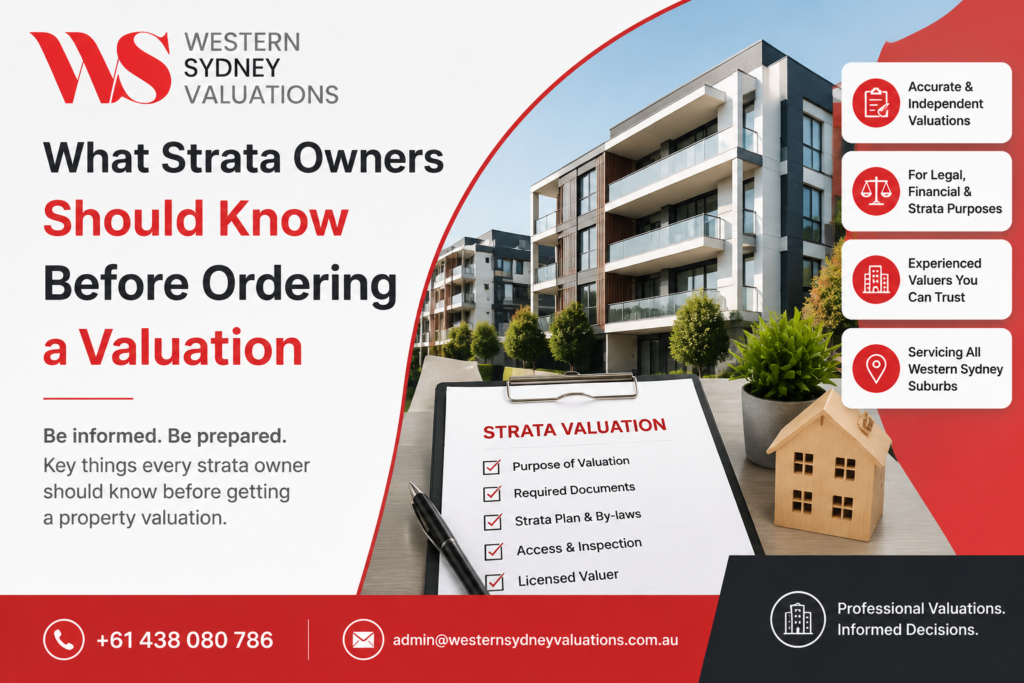
Owning a unit, townhouse or apartment within a strata scheme changes the way a valuation needs to be approached. Unlike a standalone house, a strata property sits within a shared legal and physical structure, so experienced strata valuers in Western Sydney must consider the unit itself alongside the common property, the owners’ corporation and the overall condition of the scheme. Strata owners across Western Sydney who are refinancing, transferring a property or working through a legal matter often assume a strata valuation works the same way as any other residential valuation. That assumption can lead to a report that overlooks details a lender, court or tax authority may require.
This guide explains what makes a strata valuation different, why Western Sydney owners commonly need one, what a valuer looks at during an inspection and which related valuation services may also be required.
SUMMARY
What This Article Covers: This guide explains what a strata valuation is and how it differs from valuing a standalone house. It covers the role of the owners’ corporation, the split between lot property and common property, and the situations that most commonly bring Western Sydney owners to commission an independent valuation. It also explains what a valuer looks at during a strata inspection and answers the questions owners raise most often before ordering a valuation.
What a Strata Valuation Is and Why It Differs From a Standard Valuation
A strata valuation assesses an individual lot within a strata scheme, taking into account both the unit itself and its share in the common property managed by the owners’ corporation. This dual focus is what separates strata valuation from valuing a freestanding house, where the owner controls the entire title without any shared structure to account for.
The Role of the Owners Corporation
Every strata scheme is managed by an owners corporation, and a valuer working on a strata valuation reviews how the scheme is administered, including the general condition of common areas, any pending building works, and whether the scheme is being run in a way that supports or detracts from unit values across the complex.
Common Property Versus Lot Property
A strata title separates what belongs exclusively to the unit owner, generally the internal walls and fittings, from common property such as hallways, lifts, gardens and the building structure itself. A valuer needs to clearly understand this split for the specific scheme, since it affects both the physical inspection and how the final figure is reached.
Why Strata Owners in Western Sydney Order a Valuation
A number of situations bring strata owners across Parramatta, Blacktown, Penrith and the wider Western Sydney region to commission an independent valuation.
Refinancing or Purchasing a Strata Property
Lenders require an independent valuation before approving finance secured against a strata unit, in the same way they would for a standalone house, though the strata-specific factors described above need to be properly accounted for in the report.
Capital Gains Tax and Family Law Matters
Strata owners transferring a property, dealing with an inheritance, or working through a family law property settlement often need an independent valuation to establish market value at a specific date, whether that date relates to a change of ownership or a separation.
Stamp Duty on Related Party Transfers
Where a strata property moves between family members or into a trust rather than through an open market sale, a stamp duty valuation is generally required to establish the dutiable value for Revenue NSW, since there is no arm’s length contract price to rely on.
What a Valuer Looks At When Assessing a Strata Unit
A strata inspection covers more ground than simply walking through the unit itself.
Condition and Layout of the Individual Lot
The valuer assesses the unit’s layout, condition, aspect, and any improvements in much the same way they would for a standalone property, forming the foundation of the assessment before broader scheme factors are considered.
Building Condition and Scheme Management
The overall condition of the building, the standard of common area maintenance, and any known structural or compliance issues within the scheme all factor into the valuer’s assessment, since these elements affect buyer confidence in the property as a whole.
Strata Records and Scheme History
Where available, a valuer may review strata records to understand how the scheme has been managed over time, including any significant works completed or planned, since this history provides useful context for the condition of the building and the wider complex.
Common Situations Where Strata Valuations Matter
Beyond the everyday reasons for ordering a valuation, several specific circumstances make an accurate strata assessment particularly important.
Capital Works and Building Upgrades
Where a scheme has recently completed or is planning significant capital works, such as a facade upgrade, waterproofing repairs, or lift replacement, a valuer takes this into account when assessing individual lots. Work that has already improved the building tends to support stronger values, while known future works still to be completed can influence how a valuer weighs current condition against what buyers might factor into an offer.
Disputes Between Owners or With the Owners Corporation
Disagreements over levies, building defects, or scheme management sometimes require an independent valuation to establish how a dispute has affected individual lot values, supporting mediation or, where necessary, litigation.
Deceased Estates Involving Strata Property
Executors may need a retrospective market valuation as at the date of death for capital gains tax purposes, depending on when the deceased acquired the property, how it was used and whether a CGT exemption applies.
Why Comparable Sales Work Differently for Strata Property
Comparable sales evidence for strata properties works a little differently to standalone houses, since a valuer looks specifically at other lots within the same scheme or similar nearby complexes rather than a broader mix of property types. This narrower comparison set is one reason local market knowledge matters so much when a strata valuation is being prepared, particularly in areas of Western Sydney where unit stock varies considerably between older walk up blocks and newer high rise developments.
When Western Sydney Owners Need a Strata Valuation
● When refinancing or purchasing a strata unit, townhouse or apartment
● When transferring a strata property or dealing with an inheritance
● When a family law property settlement includes a strata property
● When a strata property moves between family members or into a trust
● When a dispute with the owners corporation or between owners needs independent evidence
● When an executor is administering a deceased estate that includes a strata unit
Frequently Asked Questions
Q: Does the owners’ corporation need to approve a valuation of my unit?
A: No. A valuer can generally assess an individual lot without formal approval from the owners corporation, though access to strata records can be helpful where available.
Q: Can building defects in a strata scheme affect my unit’s valuation?
A: Yes. Known structural or compliance issues within the broader building can influence buyer confidence and therefore the valuer’s assessment of individual lots within the scheme.
Q: Do I need a strata valuation for a family law property settlement?
A: Yes, where a strata property forms part of the assets being divided. An independent valuation gives both parties and the court a clear, defensible figure to work from.
Q: What is the difference between lot property and common property in a valuation?
A: Lot property refers to what the individual owner holds title to, generally the interior of the unit, while common property covers shared areas such as hallways and gardens managed by the owners corporation. Both are considered in a full strata valuation.
Q: How long does a strata valuation take to complete?
A: Timeframes are generally similar to a standard residential valuation, though access to strata records or scheme documentation can occasionally extend the process slightly.
Q: Is a strata valuation required for stamp duty on a family transfer?
A: Yes, where the transfer occurs between related parties rather than through an open market sale, an independent valuation is generally required to establish the dutiable value for Revenue NSW.
Q: Can a strata valuation be used to resolve a dispute with the owners’ corporation?
A: It can support mediation or litigation by providing an independent view of how a dispute has affected value, though the valuation itself does not resolve the underlying disagreement.
CONCLUSION
Strata property carries a layer of complexity that standalone houses do not, from shared common property through to the condition and management of the wider scheme. Western Sydney owners who understand this before ordering a valuation are far better placed to get a report that genuinely reflects their property’s position.
Engaging an experienced valuer familiar with the local Western Sydney strata market remains the most reliable way to arrive at a figure that accounts for both the unit and the scheme it sits within.
Need a Strata Valuation? Contact Western Sydney Valuations
Western Sydney Valuations provides independent strata valuations, along with capital gains tax, family law and stamp duty valuation services, for owners across Parramatta, Blacktown, Penrith, Liverpool and the broader Western Sydney region.
Visit westernsydneyvaluations.com.au | Parramatta, Blacktown, Penrith and Liverpool