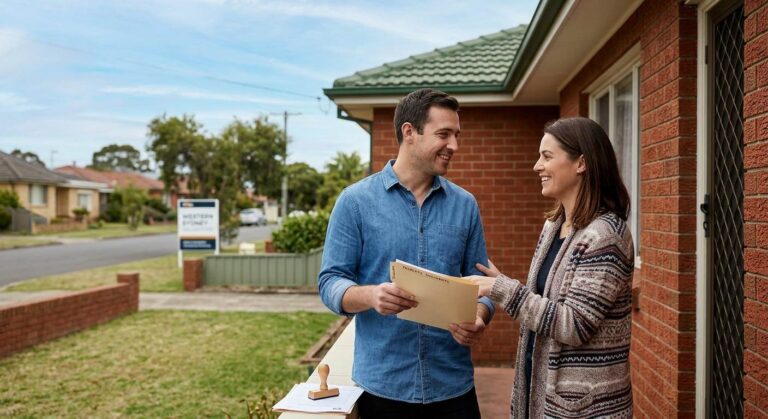



When Do You Need a Stamp Duty Valuation in Western Sydney?

Most people who buy a property in Western Sydney through a standard real estate transaction never need to think about a stamp duty valuation. The contract price is clearly documented, Revenue NSW generally accepts it, and the conveyancer manages the duty calculation as part of the settlement process. However, many property transfers across Parramatta, Blacktown, Penrith, Liverpool and the broader Western Sydney region do not follow this straightforward path. In these situations, an independent stamp duty valuation Western Sydney report may be required to establish the property’s market value and support the transfer duty assessment.
This guide explains when a stamp duty valuation may be needed, why Western Sydney’s changing property market makes accurate valuation evidence increasingly important, and what can happen when Revenue NSW determines that the declared value does not reflect the property’s genuine market value.
Summary: This guide covers the situations where a stamp duty valuation is required under NSW law, with a specific focus on the types of property transfers common across Western Sydney, including family transfers, SMSF transactions, trust restructures, and private sales. It explains how Revenue NSW approaches transactions that are not conducted at arm’s length, what an independent valuation achieves in those situations, and why the rapid growth in Western Sydney property values over the past decade makes getting the figure right more consequential than ever.
Stamp Duty Valuation Actually Means in NSW
Stamp duty in New South Wales is formally called ‘transfer duty’, and it is calculated on the greater of two figures: the price paid for the property or its market value at the date of transfer. For a standard open market sale, these two figures are usually the same, and the contract price is accepted by Revenue NSW without question.
A stamp duty valuation becomes relevant when there is no reliable contract price or when Revenue NSW has reason to think the price on the paperwork does not reflect what the property would genuinely sell for in the open market. In those cases, an independent assessment by a Certified Practising Valuer accredited with the Australian Property Institute gives Revenue NSW the evidence it needs to calculate the correct duty and gives the transferring parties a defensible position if the figure is ever questioned.
The Core Rule: Transfer duty in NSW is assessed on the higher of the contract price and the unencumbered market value of the property at the date of the transfer. When there is no arm’s-length contract price, or Revenue NSW believes the price understates market value, an independent stamp duty valuation is required.
Transactions That Trigger a Stamp Duty Valuation in Western Sydney
These are the situations where a stamp duty valuation is either legally required or strongly advisable before the transfer documents are lodged with Revenue NSW.
Family Transfers and Related Party Transactions
This is the most common trigger across Western Sydney, and it comes up more than most families expect. When a parent transfers a property to an adult child, when siblings divide an inherited property, when a property moves between spouses in circumstances other than a primary residence exemption, or when any transaction occurs between parties with a personal or business relationship, Revenue NSW treats it as a related party transfer. That means the contract price, if there is one, is not automatically accepted as the dutiable value.
Western Sydney has a long history of family-owned properties across Penrith, the Hills District, Blacktown, and outer south-western suburbs like Campbelltown and Camden. Many of these properties have appreciated significantly over the past decade, and a transfer that might have been straightforward years ago now involves a market value that Revenue NSW will want evidence for before accepting the duty calculation.
Transfers Into or Out of an SMSF
When an individual transfers a property into their self managed super fund, or when a fund disposes of a property to a related party, the transaction occurs between connected parties rather than in the open market. Because the fund and its members are connected parties, Revenue NSW may require evidence of the property’s market value; however, transfer-duty concessions for eligible SMSF transactions may apply subject to detailed statutory and superannuation-law requirements.
Industrial properties and commercial premises in Western Sydney are commonly held through SMSFs, and with commercial property values having moved substantially in areas like Wetherill Park, Emu Plains, and the Norwest Business Park, the difference between an unsupported value and a properly evidenced one can have a material impact on the duty payable.
Transfers Into Trusts and Company Structures
Where a property is transferred into a discretionary trust, a unit trust, or a corporate structure, there is typically no arm’s length contract price. The transfer is a structural or planning arrangement rather than a commercial transaction, and Revenue NSW requires independent evidence of value to assess the correct duty. The same applies when property moves out of a trust to a beneficiary, or when a company’s landholding is affected by a share transfer that triggers landholder duty.
Private Sales Without an Agent
A private sale between unrelated parties where no licensed real estate agent was involved can also attract Revenue NSW’s attention. Without the marketing process of an open market sale to test the price, there is less independent evidence that the agreed figure reflects genuine market value. For straightforward transactions between clearly unrelated parties, the risk is lower, but for any transaction where the relationship between buyer and seller could be questioned, a valuation provides protection.
Gift Transactions
When a property is gifted, there is no consideration at all, which means there is no contract price for Revenue NSW to assess duty against. Market value at the date of transfer becomes the only basis for the calculation, and an independent stamp duty valuation is the standard evidence required. In Western Sydney, where properties in suburbs like Kellyville, Baulkham Hills, and Schofields have seen significant value growth, gifts between family members can carry substantial duty implications that the parties may not be aware of when they arrange the transfer.
Real Scenario: A family in Blacktown decided to transfer the family home to their eldest daughter, who had lived in the property and cared for her parents for several years. They agreed on a transfer price well below what the property would achieve on the open market, reflecting the family circumstances rather than commercial reality. Their conveyancer explained that because this was a related party transfer, Revenue NSW would assess duty on the unencumbered market value rather than the agreed family price. An independent stamp duty valuation was commissioned. The valuer inspected the property, reviewed comparable sales of similar homes across Blacktown and the surrounding suburbs, and produced a report confirming the market value as at the transfer date. The conveyancer lodged this alongside the transfer documents, and Revenue NSW accepted the valuation without query. The family paid duty on the correct market value figure rather than on an estimate Revenue NSW might have generated independently
What Revenue NSW Does When No Valuation Is Provided
Revenue NSW is not passive when it believes a declared value does not reflect genuine market value. It has its own valuation resources and databases, and it can conduct its own assessment if a transaction is flagged as potentially understating the dutiable value. That assessment is based on Revenue NSW’s own evidence rather than a detailed inspection of the specific property, and the result is not always in the taxpayer’s favour.
Once Revenue NSW issues its own assessment, the party who did not provide their own valuation is in a considerably weaker position to contest it. An independent stamp duty valuation obtained before the transfer is lodged puts a defensible, evidence-based figure on the table from the outset and substantially reduces the risk of a Revenue NSW assessment that is higher than the correct figure.
Why Western Sydney’s Property Market Makes This More Consequential
Stamp duty is calculated as a percentage of the dutiable value on a sliding scale. The higher the property value, the higher the rate that applies, and in a market where a house in Penrith or Parramatta that was worth four hundred thousand dollars fifteen years ago may now be worth close to a million or more, the gap between an unsupported value and a properly evidenced one can mean a significant difference in duty payable.
This matters particularly for family transfers, where the parties may not have kept pace with how much the property has grown in value and may be surprised to find that Revenue NSW’s own view of market value is substantially higher than the price agreed between family members. A stamp duty valuation commissioned before the transfer provides clarity before the documents are lodged rather than after a higher assessment has been issued.
| Legislation Reference |
| Under the Duties Act 1997 (NSW), transfer duty is assessed on the dutiable value of the property, which is the greater of the consideration paid and the unencumbered value of the property. Where the Chief Commissioner of State Revenue is not satisfied that the consideration reflects market value, the Chief Commissioner may make a separate determination of value. Revenue NSW Revenue Ruling DUT 012 sets out the evidence requirements applicable to stamp duty valuations. |
What Happens When You Instruct a Valuer for Stamp Duty
Revenue NSW requires that a stamp duty valuation involve a physical inspection of the property. This is different from some other valuation types where desktop or kerbside assessments are acceptable. The valuer must attend the property, assess its condition and improvements, and base the report on specific sales evidence that is current relative to the transfer date.
The report must clearly state the effective date of the valuation, which is typically the date of the transfer or contract, the methodology used, the comparable sales relied upon, and the concluded market value. It is addressed for transfer duty purposes, which signals to Revenue NSW that it has been specifically prepared for this purpose rather than adapted from a general market assessment.
• Provide the valuer with the transfer date or expected transfer date so the correct effective date is used
• Supply the property address and, if available, the certificate of title or deposited plan details
• Tell the valuer the nature of the transaction, whether a family transfer, SMSF acquisition, trust restructure, or gift, so the report is appropriately structured
• Allow enough time for the valuer to inspect the property and produce the report before the transfer documents are lodged
Conclusion
A stamp duty valuation in Western Sydney is not something every property transfer requires, but the transactions that do require one are common, and the consequences of not having one when Revenue NSW expects it can be significant. Family transfers, SMSF transactions, trust arrangements, and gifts all sit outside the arm’s length norm that Revenue NSW accepts without question.
Getting an independent valuation before the transfer is lodged puts a defensible figure in place from the start, and in a market that has grown as substantially as Western Sydney’s has over the past decade, that figure matters more than ever.
Frequently Asked Questions
Do I always need a stamp duty valuation when transferring property in NSW?
No. A standard arm’s length sale through a real estate agent is accepted on the contract price. A stamp duty valuation is required when the transfer is between related parties, involves an SMSF or trust, is a gift, or occurs in circumstances where Revenue NSW is likely to question whether the declared value reflects genuine market value.
Does Revenue NSW require a physical inspection for a stamp duty valuation?
Yes. Revenue NSW requires that the property be physically inspected by the valuer when preparing a stamp duty valuation report. Desktop and kerbside assessments are not accepted for this purpose.
What happens if Revenue NSW disagrees with the value I have declared?
Revenue NSW can conduct its own valuation assessment and issue a higher duty assessment if it believes the declared value understates market value. Having an independent stamp duty valuation prepared before lodging the transfer is the most effective way to avoid this outcome.
How long does a stamp duty valuation take in Western Sydney?
Most residential stamp duty valuations across Western Sydney are completed within two to five business days of the property inspection. Commercial and industrial properties may take longer depending on complexity and the research required.
Can the same valuation be used for stamp duty and capital gains tax?
Sometimes yes, but the purposes are different and the effective dates may not align. A stamp duty valuation is dated to the date of transfer, while a CGT valuation is usually dated to the date of acquisition or change of use. The valuer needs to be told both purposes upfront to ensure the report addresses each requirement correctly.
Does a gift of property attract stamp duty in NSW?
Yes. When a property is gifted, Revenue NSW assesses duty on the unencumbered market value of the property at the date of the gift, since there is no contract price to use instead. An independent stamp duty valuation is required to establish that market value.
Need a Stamp Duty Valuation in Western Sydney
Western Sydney Valuations provides independent, API-accredited stamp duty valuation reports for residential, commercial, and industrial property across Parramatta, Blacktown, Penrith, Liverpool, Campbelltown, and the broader Western Sydney region. Reports completed with full Revenue NSW compliance.
Visit westernsydneyvaluations.com.au to request a quote today.